Atomic Habits for Kids: How to Teach Your Child the Power of Tiny Changes
Atomic habits for kids is one of the most powerful ideas a parent can introduce early. Every parent wants their child to develop good habits — whether that’s reading every night, tidying their room, or practising an instrument. But telling a child to ‘just do it’ rarely works. James Clear’s bestselling book Atomic Habits explains exactly why habits form, why they stick, and why tiny changes matter more than big dramatic ones.
The ideas in this book are powerful for adults — but they’re arguably even more powerful when introduced to children early. Here’s how to take the core concept from Atomic Habits and make it meaningful for your 6 to 10 year old.
What Atomic Habits for Kids Is Really About
James Clear spent years studying the science of habits and how small, consistent actions compound into remarkable results over time. The central argument of the book is simple but counterintuitive: big results don’t come from big actions. They come from tiny improvements repeated consistently over a long period.
Clear introduces a framework called the habit loop — every habit is built on a cue, a craving, a response, and a reward. Understanding this loop gives you the ability to build habits intentionally rather than accidentally.
The book has sold over 15 million copies worldwide and sits permanently on bestseller lists for one reason: it works. The strategies are practical, evidence-based, and immediately applicable.
The One Big Idea Your Child Needs to Understand
Out of everything in Atomic Habits, the concept most worth teaching a child is this:
Getting 1% better every day matters more than trying to be perfect.
James Clear describes how improving just 1% each day results in being 37 times better by the end of a year. Conversely, getting 1% worse each day brings you close to zero. The math is striking — but the insight is what matters for children.
Most kids believe talent is fixed. They either think they’re “good at math” or they’re not. They either believe they’re athletic or they aren’t. Atomic Habits gives parents a concrete, simple argument against that thinking: progress is about your daily actions, not your starting point.
How to Explain It to Your Child
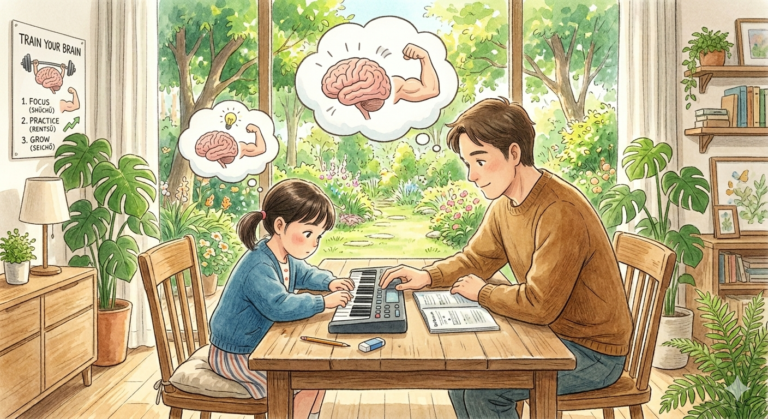
The key to making this land for a 6 to 10 year old is to make it physical and visual — not abstract.
Try this conversation:
Grab a blank piece of paper and draw a straight horizontal line across the middle. Tell your child this line is where they are today with something they want to get better at — reading, swimming, drawing, anything they choose.
Now draw two lines branching away from the starting point. One curves slowly upward. One curves slowly downward. Explain that every single day, their choices push them up the top line or down the bottom line — just a tiny bit.
Then say: “You don’t have to be amazing today. You just have to be a tiny bit better than yesterday. That’s it. That’s the whole secret.”
For most children this is genuinely revelatory. They’ve been told to “try harder” or “do better” — but no one has ever told them that small is enough. That tiny counts. That the direction matters more than the size of the step.
One Simple Activity: The 1% Habit Tracker
This activity takes 5 minutes to set up and reinforces the core idea every single day.
What you need:
- A piece of paper or a small notebook
- A pen or coloured markers
- 30 days of commitment (from you and your child)
How it works:
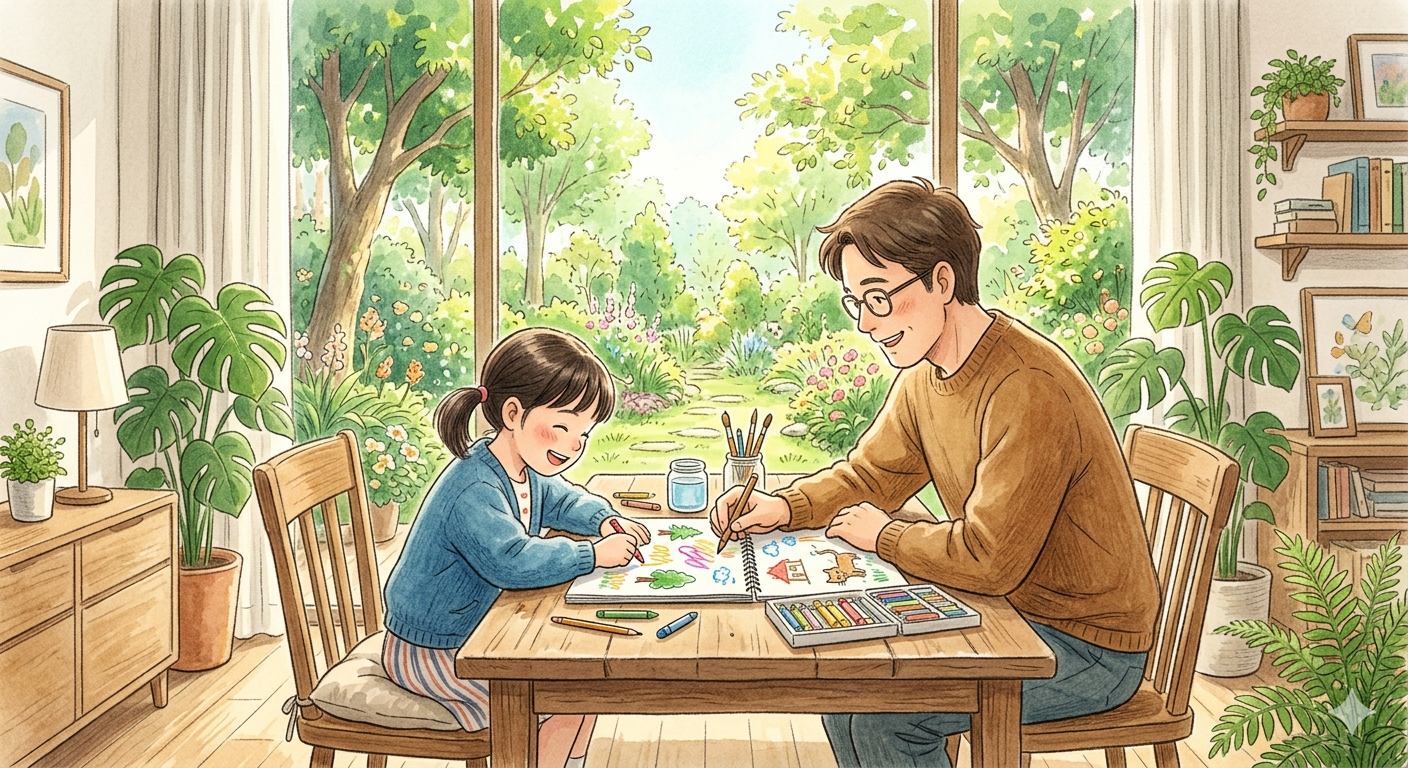
Sit with your child and ask them to pick one small habit they want to build. Keep it tiny — this is important. Not “read more” but “read one page before bed.” Not “get better at drawing” but “draw one small thing every morning.” The smaller the better.
Draw a simple grid together — 7 columns, 5 rows, one box for each day of the month. Every day they do the habit, they get to put a big X in that day’s box.
After a week, look at the chain of X’s together. Ask: “How does it feel to see those X’s? What happens if we don’t break the chain?”
After 30 days, look at what they’ve accumulated. A child who read one page a night has now read 30 pages. A child who drew one thing every morning has 30 drawings. Show them the stack. Let the compound effect speak for itself.
This is exactly what James Clear calls “habit stacking” and “never missing twice” — adapted into something a first-grader can own and feel proud of.
Talking Points for Parents
Here are three moments in everyday life where you can reinforce this idea without a formal conversation:
When they want to quit something: Instead of “don’t give up,” try “you don’t have to be good at it today — you just have to show up today.”
When they compare themselves to others: “They’ve had more practice days than you. That’s all. More practice days = more X’s on the chart.”
When they make a mistake: “One missed day doesn’t break the habit. James Clear says never miss twice — so what do we do tomorrow?”
Each of these reframes a common childhood frustration through the lens of the book, without your child ever needing to read it themselves.
Why This Matters More Than You Think
The habits your child builds between the ages of 6 and 10 become the baseline they return to for the rest of their life. Research in developmental psychology consistently shows that self-regulation habits formed in early childhood are among the strongest predictors of adult success — stronger than IQ, stronger than socioeconomic background.
Teaching your child that they are the architect of their own habits — not a passive recipient of talent or luck — is one of the most valuable gifts you can give them. Atomic Habits gives you the framework to have that conversation in a way that sticks.
Read the Book Yourself
If you haven’t read Atomic Habits yet, it’s worth every page. James Clear writes with clarity and practicality that makes the science of behavior change accessible and immediately useful.
👉 Get Atomic Habits on Amazon (affiliate link)