Deep Work for Kids: How to Teach Your Child the Power of Focus
Teaching deep work for kids might sound ambitious — but in a world of smartphones, YouTube notifications, and constant noise, the ability to focus deeply on one thing is becoming rare and increasingly valuable. Cal Newport’s book Deep Work makes a compelling argument that the people who will thrive in the modern world are those who can concentrate without distraction for long stretches of time.
This is a skill most adults struggle with. But here’s the thing — children who learn it early have an enormous advantage. Here’s how to take Newport’s core ideas and make them meaningful for your 6 to 10 year old.
What Deep Work for Kids Is Really About
Cal Newport draws a sharp distinction between two modes of working. The first is shallow work — emails, quick tasks, browsing, multitasking. Easy to do, easy to replicate, and not particularly valuable. The second is deep work — cognitively demanding tasks performed in a state of distraction-free concentration that push your abilities to their limit and create real value.
Newport’s argument is simple but striking: deep work produces the best results, deep work is becoming increasingly rare, and therefore deep work is becoming increasingly valuable. The people who learn to do it well — whether they’re writers, programmers, scientists, or artists — consistently outperform those who don’t.
The book has resonated with millions of readers precisely because it names something most people feel but can’t quite articulate: that constant distraction is costing them something important.
The One Big Idea Your Child Needs to Understand
Out of everything in Deep Work, the concept most worth teaching a child is this:
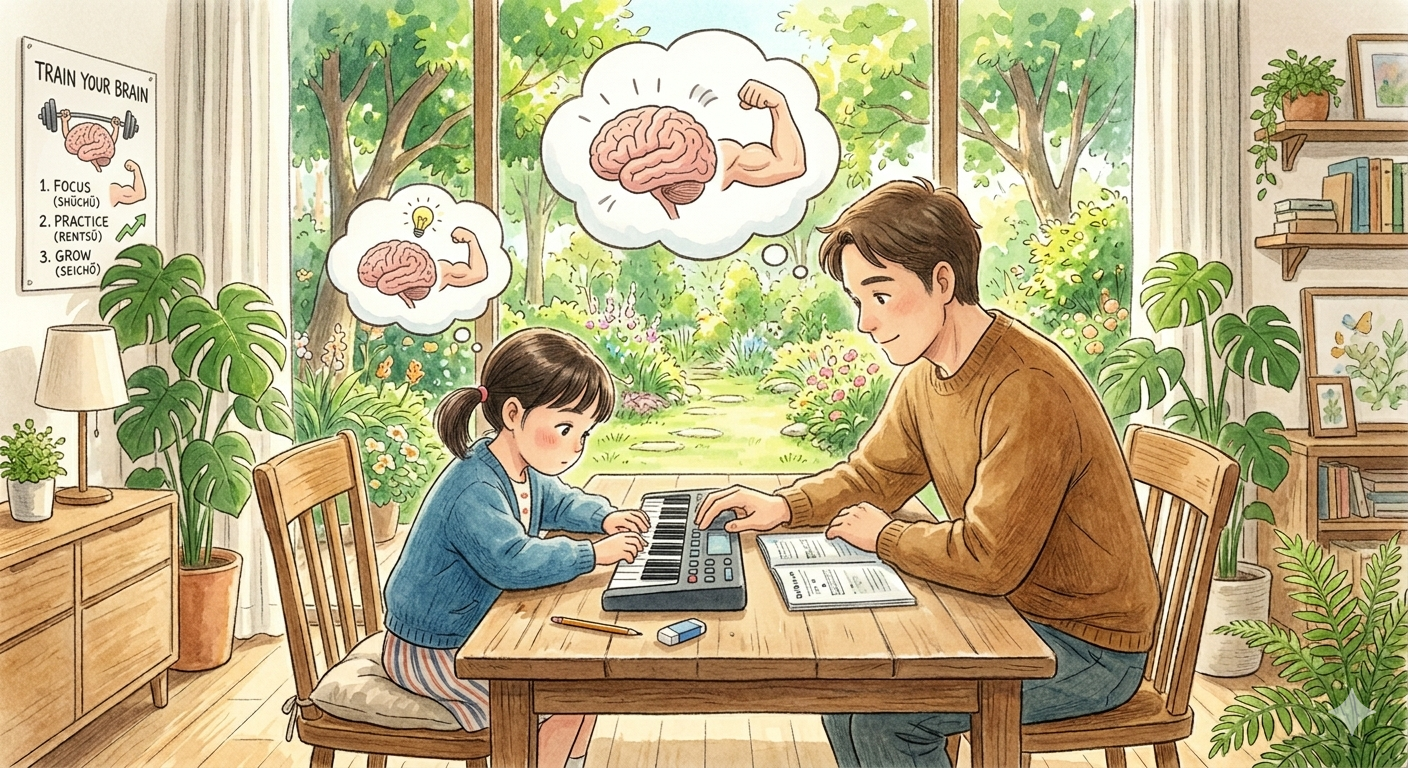
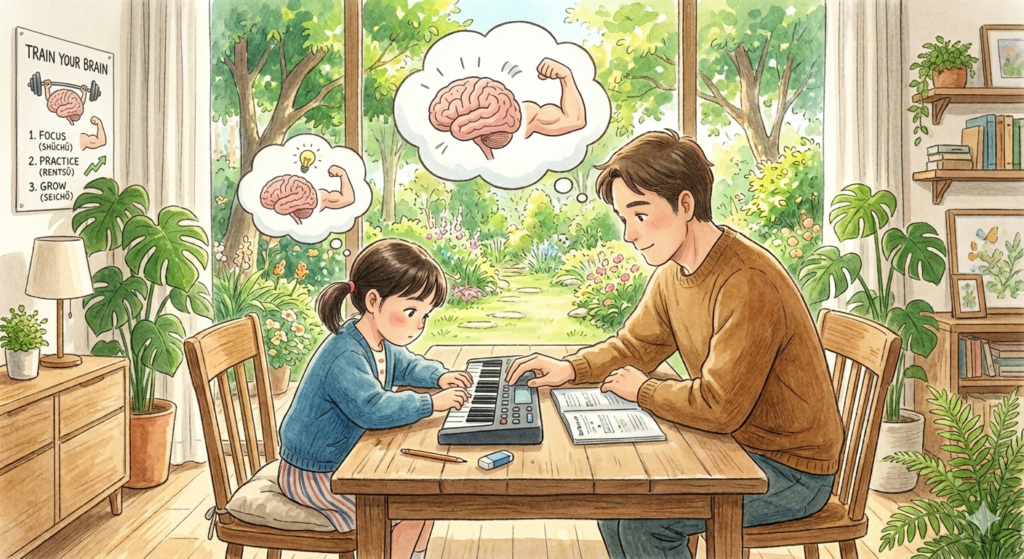
Your brain is like a muscle — the more you practise focusing, the stronger your focus gets.
Newport describes how the ability to concentrate deeply is not a fixed trait. It is a skill that improves with deliberate practice and deteriorates with neglect. Every time you give in to distraction — pick up your phone, switch tasks, let your mind wander — you are training your brain to expect distraction. Every time you push through and stay focused, you are building something.
For children, this reframe is powerful. They often believe they simply “can’t focus” — as if it’s a personality trait they were born with or without. The truth is that focus is trainable, and starting early is a significant advantage.
How to Explain It to Your Child
The best way to make this land for a 6 to 10 year old is through a physical analogy they already understand.
Try this conversation:
Ask your child to show you their arm and flex their muscle. Ask: “How did that muscle get there?” They’ll say practice, exercise, sport. Now say: “Your brain has a focus muscle too. And just like your arm muscle, it gets stronger every time you use it — and weaker every time you skip it.”
Then introduce the concept of “Focus Time” — a specific window each day where one thing gets your complete attention. No interruptions, no switching, no sneaking glances at a screen. Just one thing, done properly.
Tell them: “Deep work means doing your hardest thinking when your brain is fresh, without anything getting in the way. It’s not about working longer — it’s about working without being interrupted.”
For most children this is a new idea. They’ve been told to “concentrate” many times — but no one has ever explained why concentration works, or that it is something they can deliberately get better at.
One Simple Activity: The Focus Block Challenge
This activity builds the focus muscle gradually — starting small enough to succeed and expanding over time.
What you need:
- A timer (a physical one works better than a phone for obvious reasons)
- A notebook or piece of paper
- One task your child needs to do — homework, reading, drawing, practising an instrument
How it works:
Start with just ten minutes. Set the timer, agree on the one task, and make a simple rule together: when the timer is running, nothing else exists. No questions, no snacks, no checking anything. Just the task.
When the timer goes off, stop — even if they’re in the middle of something. This is important. You want the focus block to feel finite and achievable, not endless.
After a week of ten-minute blocks, move to fifteen. Then twenty. Newport himself works in blocks of several hours — but ten minutes is the right starting point for a seven year old, and the principle is identical.
Keep a simple log together: the date, how long the focus block was, and what they worked on. Over a month, watching the numbers grow is its own motivation.
You’ll notice two things as this practice develops. First, your child will start to resist interruptions during focus time — they’ll ask for it. Second, the quality of what they produce in that focused window will be noticeably better than what they produce while half-distracted.
Talking Points for Parents
Three moments in everyday life where you can reinforce this without a formal conversation:
When they say they can’t concentrate: “Your focus muscle is still warming up. Let’s just try five minutes and see what happens.”
When they’re tempted by a screen during homework: “That’s the distraction trying to win. Every time you say no to it, your focus muscle gets a little stronger.”
When they do something really well: “Notice how good that felt? That’s what happens when your focus muscle gets to do its job properly.”
Why This Matters More Than You Think
The research on attention is sobering. Studies consistently show that the average time a person spends on a single screen before switching has dropped significantly over the past decade. Children growing up today are being trained by their environment to expect constant stimulation and immediate gratification.
The child who can sit with a hard problem, resist the pull of distraction, and think deeply about one thing at a time will have a genuine advantage — in school, in relationships, and eventually in their career. Not because they’re smarter, but because they’ve built a skill that most people are losing.
Deep Work gives parents the framework to have that conversation with intention rather than by accident.
Read the Book Yourself
Deep Work by Cal Newport is one of the most practically useful books written in the last decade. It will change how you think about your own working hours as much as your child’s.
👉 Get Deep Work on Amazon (affiliate link)